
The demo is ready. The buyer’s priority is still unclear.
Applying ADDIE to SaaS sales training.
ADDIE is a general instructional design framework for planning, developing, delivering and evaluating learning. This guide shows one example of applying its 5 stages to SaaS sales training for account executives (AEs) and sales engineers (SEs).
Explore the 5 stages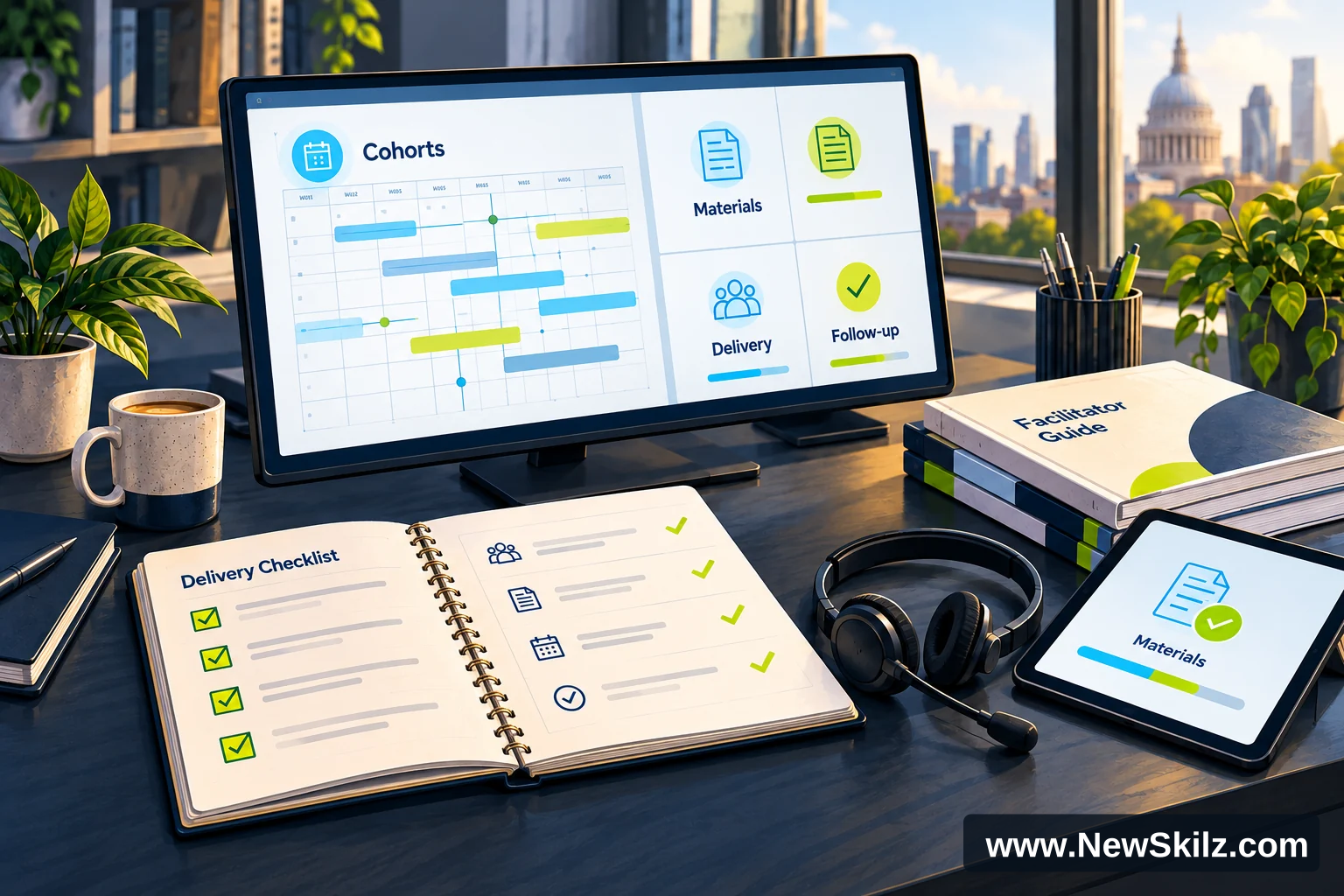
A general framework, applied to a sales training brief
5 stages. One SaaS sales training example.
Analysis, Design, Development, Implementation and Evaluation apply across many learning contexts. Here, each stage combines its general purpose with an application to the same SaaS sales training brief.
01 / 05
Analysis
What needs to happen differently?
Identify the audience, work requirements and barriers to performance.
In this example: AEs and SEs know product features but need to connect discovery findings to a relevant demo and an agreed next step.
Useful outputA brief focused on discovery, demo relevance and AE–SE handoff.
02 / 05
Design
What will participants practise and demonstrate?
Choose objectives, activities and feedback criteria.
In this example: Practise exploring a buyer’s workflow, handing the brief from AE to SE and demonstrating the agreed priority.
Useful outputObservable criteria for questioning, handoff and demo relevance.
03 / 05
Development
Which materials will support that practice?
Build or adapt materials, then review and pilot them.
In this example: Create fictional buyer briefs, AE and SE role cards, and an observer checklist using approved product information.
Useful outputA reusable practice pack ready to pilot.
04 / 05
Implementation
Are people and delivery arrangements ready?
Prepare participants, facilitators, access and responsibilities.
In this example: Confirm demo access and safe sample data, brief the facilitator and agree how managers will support workplace use.
Useful outputPrepared delivery and a named manager review.
05 / 05
Evaluation
What changed, and what needs further practice?
Compare learning and workplace evidence against the agreed starting point.
In this example: Compare an initial and repeat attempt, then review an agreed sample of discovery-to-demo interactions using the same criteria.
Useful outputEvidence of progress and the next coaching priority.
Agree the evidence during Analysis and Design. Pilot the buyer brief and demo activity during Development, gather delivery feedback and refine the next cohort using the workplace review.
Illustrative SaaS sales training example
One brief: connect discovery to a relevant demo.
An enablement manager wants AEs and SEs to prepare more focused buyer meetings. This fictional programme uses the team’s approved sales playbook and product information, with the same brief running through all 5 ADDIE stages.
Agree the performance brief
Focus on 3 behaviours: establish the buyer’s workflow and priority, give the SE a concise discovery handoff, and connect the demo to that priority.
Run the practice and feedback
In a fictional buyer scenario, an AE leads discovery and hands the brief to an SE, who delivers a focused demo. An observer gives specific feedback before a repeat attempt.
Review workplace application
Managers use the same criteria on an agreed sample of real interactions, within the organisation’s information-handling rules. The review identifies what needs reinforcement in the next practice cycle.
Putting the framework to work
Build the learning around your sales conversations.
Bring your sales playbook, approved product information, AE and SE roles, and the buyer situations your team faces. We use these to shape practice, feedback and manager follow-through. For an established programme, we agree permitted adaptations and delivery standards.
Discuss your learning briefFurther reading
Framework overview and examples written by NewSkilz. The examples are fictional.