
A programme can run smoothly while one person remembers every exception, approval and useful contact. The difficulty appears when they are away or move to another assignment. The shared folder contains plenty of documents. It does not explain which version is current, why a cohort moved or who is waiting for a decision.

Handover should make the programme operable by another agreed owner. Start building it during delivery. Waiting until the final week encourages a large file transfer that leaves the reasoning and open work behind.
Identify what the next owner will need to do

List the recurring tasks and near-term decisions. They may include scheduling cohorts, confirming readiness, issuing materials, briefing facilitators, sending joining instructions and coordinating application reviews. Tailor the record to those actions rather than preserving every email because it might become useful.
Identify the authoritative sources for content, systems and processes. State who can approve a change and who provides support. A handover should make these boundaries visible, particularly when NewSkilz has coordinated the programme but the client's business and technical owners hold the underlying decisions.
Ask the receiving owner which tasks they understand and where they need context. Their questions are a practical test of the handover's usefulness.
Build a compact operating record

The record can use the client's existing format. Its value comes from clarity and maintenance, rather than a particular tool. Include the following elements where they matter:
- Purpose and scope: audience, intended tasks, agreed outputs and boundaries.
- Current plan: cohorts, delivery sequence, milestones and confirmed dependencies.
- Ownership: action owners, decision owners and support routes.
- Material set: approved releases, source locations and adaptation rules.
- Open work: unresolved items, consequences, next actions and due points.
- Review rhythm: what evidence is reviewed, by whom and when.
- Decision history: significant choices and enough reasoning to explain them.
Keep completed work distinguishable from live actions. Use brief decision notes for meaningful changes. A future owner needs to know that a follow-up session was delayed to allow workplace application, not simply that the date moved.
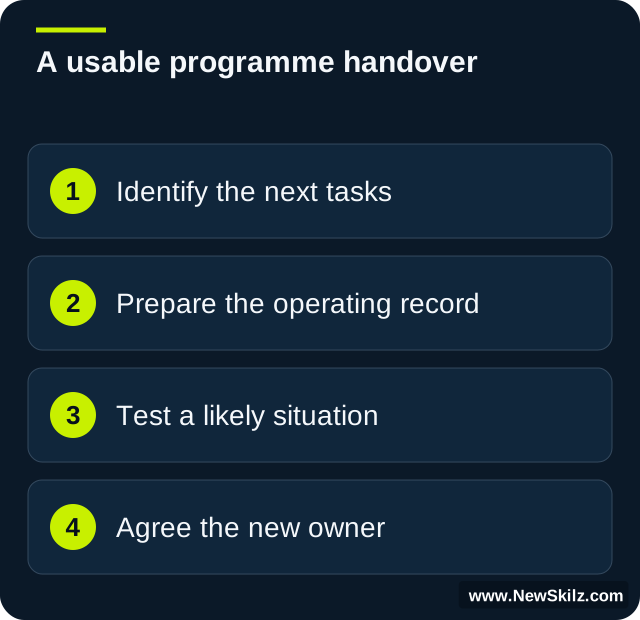
Test the handover on a likely situation
Consider an illustrative regional learning programme with two cohorts delivered and three remaining. The coordinator is handing responsibility back to an internal L&D lead. One region has agreed different joining instructions, a material correction applies from the next cohort, and one manager review remains outstanding.
Ask the receiving owner to explain how they would prepare the next cohort using the record. Can they identify the approved materials, the readiness conditions and the people who can answer unresolved questions? Can they see which local difference is approved and why?
If they need the departing coordinator to reconstruct those facts, improve the record before signing off. This exercise tests continuity without requiring a complete repeat of the programme.
Agree maintenance, then hand over responsibility
Name who updates each part of the operating record after the engagement. The schedule may belong to a coordinator, material approvals to a content owner and workplace application reviews to managers. Confirm how updates reach the people who depend on them.
Finish with an explicit handover note: responsibilities accepted, remaining questions, open actions and the next review. Distinguish completed coordination work from decisions still awaiting an owner. Transfer the necessary context through a discussion as well as documents, especially where judgement is involved.
Follow the client's arrangements for access, confidentiality and retention. Remove unnecessary duplication where appropriate, while retaining the agreed working record. The practical aim is that the next owner can make the next decision, prepare the next cohort and recognise the next risk without searching someone else's inbox for the answer.
Make it relevant to your team.
Use your goals, roles and real situations to choose the next useful step.