
The buyer says, “Send us some information and we will be in touch.” There may be a useful request inside that sentence, or the meeting may have reached its natural end. A constructive close clarifies what the information is for and whether a further action makes sense. It does not manufacture commitment simply to improve an opportunity record.

Check what the meeting actually established

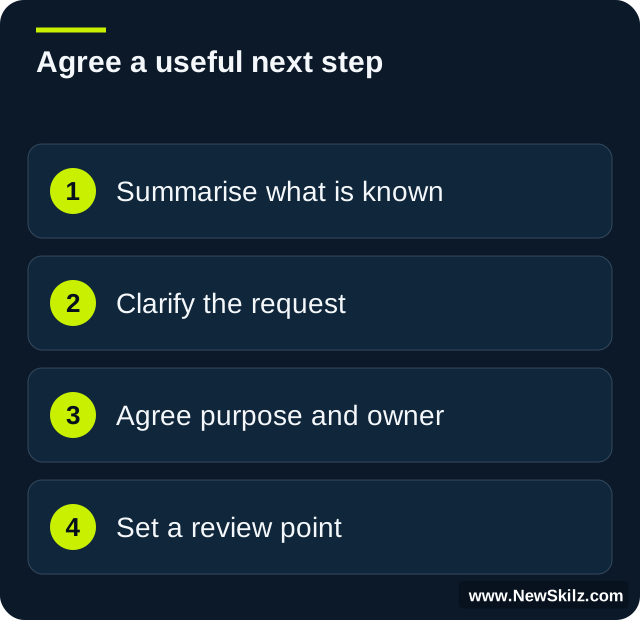
Before proposing an action, summarise the buyer’s priority and the points the discussion clarified. Invite correction. Include uncertainty rather than hiding it behind a positive recap. A buyer who has seen a relevant workflow may still need to involve another stakeholder or check whether the change deserves attention.
Ask what they now need to judge. This keeps the next step connected to their decision instead of your standard sequence. If the meeting did not establish a worthwhile problem or fit, recognise that. Another demonstration is not automatically a useful answer to a weak first conversation.
Give requested information a purpose

When the buyer asks for material, explore who will use it and what question it needs to answer. “Which part would be most useful for your internal discussion?” can reveal whether they need a workflow explanation, approved technical evidence or a summary for a sponsor.
- What will this help you decide?
- Who needs to review it?
- What remains unclear after today?
- How would you like to handle questions that come back?
Send relevant approved information with a short explanation of its purpose. Avoid an attachment bundle that requires the buyer to reconstruct the meeting. Keep promises about content and timing within what you can deliver.
Turn an illustrative request into a useful action

Imagine a buyer requesting a general deck after a demo. The seller asks what their internal discussion needs to establish. The buyer reveals that an operations lead must understand how request ownership would change, while IT needs to validate a technical dependency.
The parties can now consider two focused actions: a workflow summary for operations and a specialist question for IT. These may need different owners and formats. The seller should check that the buyer wants those actions and can involve the right people. A more specific plan is useful because it serves stated concerns, not because it adds activity.
Agree purpose, owner and review point together

Use a small action record rather than a long mutual plan when the situation does not need one. Capture the question, the action, the person accepting ownership and the point at which its result will be considered. A calendar invitation alone does not establish what either side will do.
A simple template is: “To help decide [decision], [owner] will provide or review [evidence]. We will consider the result at [agreed review point].” Check that the buyer recognises the purpose and that internal colleagues accept any commitments assigned to them. Record a conditional action as conditional.
Practise a close that allows an honest answer
Rehearse with buyers who respond differently: one needs a specific follow-up, one lacks a decision owner and one sees insufficient relevance. Observe whether the seller clarifies the situation and offers an appropriate route. The seller should be able to end respectfully without forcing another meeting.
After a real conversation, send a concise summary of confirmed points, open questions and accepted actions. At the next review, check what changed rather than repeating the previous pitch. When an action stalls, ask what prevented it and whether it still serves a priority. Useful next steps make the buying work clearer for both sides.
NewSkilz tailors closing-conversation practice to your buyer decisions, sales roles and the follow-ups your team needs to handle credibly.
Make it relevant to your team.
Use your goals, roles and real situations to choose the next useful step.