
The buyer asks where data is held, whether an integration is supported or what happens when access is revoked. The seller wants to keep the meeting moving. This is precisely the moment to be clear about what is known. Credibility comes from handling the question properly, including an honest route to validation.

Find the question behind the wording

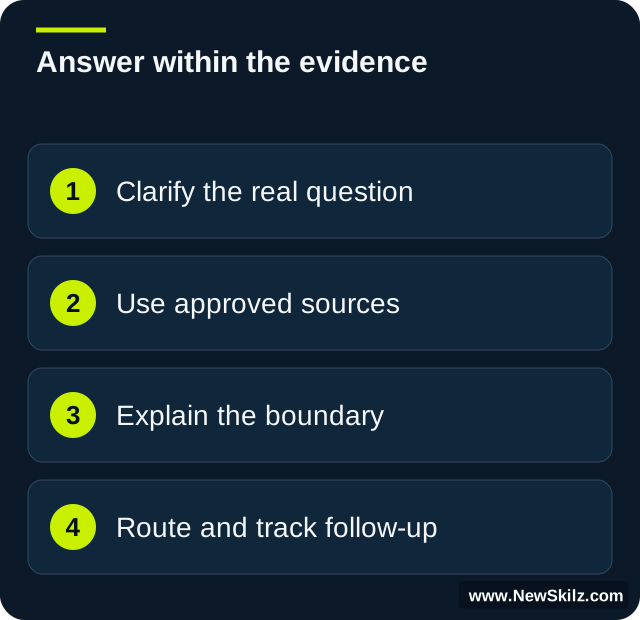
A broad question such as “Is it secure?” can contain several different concerns. Ask what the buyer needs to establish and which requirement they are assessing. They may be asking about access, data handling, a review process or another area. Do not assume that the answer to one concern settles all of them.
Use plain language to clarify scope. “Which information and user roles are you considering?” or “What does your reviewer need us to confirm?” can make the next answer more precise. Record the requirement in the buyer’s words so the specialist receives the actual question rather than your interpretation of it.
Use an evidence boundary for every answer
Prepare with current information approved by the responsible product, security or technical owner. Know where to find it and how to identify material that needs checking. A feature remembered from another version, an old sales deck or a colleague’s informal comment may not be enough to support the answer.
- Confirmed: supported by relevant approved information.
- Requires validation: a question for the appropriate owner.
- Outside the agreed scope: an issue needing a separate discussion.
These categories can guide your internal preparation. In the buyer conversation, state the specific fact and its boundary rather than reciting labels. Avoid implying a commitment beyond what your evidence supports.
Handle an illustrative interruption calmly

Illustrative buyer question: “Great demo. Now who’s migrating the data?” The buyer’s records sit in a legacy on-premises system, and the project involves new cloud workflows. Even if approved product information confirms a CSV import capability, that does not establish who will prepare the data, validate a trial import or sign off the result.
A credible response is: “Which data and workflows are in scope, and who owns them today? Let’s bring the right technical and project owners together to confirm responsibilities, the checks you need and the evidence required before you approve the move.” Explain what the approved information establishes, then agree a route for the remaining questions. A confident presentation needs this practical follow-through.
Give the unanswered question an owner and a route

Record the question, its relevance to the decision and the person responsible for validation. Ask what format the buyer needs and when the answer becomes important. Confirm a realistic follow-up arrangement with your internal owner before promising a response time you cannot control.
For a complex question, a focused specialist conversation may be more useful than a forwarded document. Brief the specialist on the buyer’s context and define what that conversation should establish. Keep commercial, product and implementation responsibilities distinct. A seller can coordinate clarification without taking ownership of a technical decision they are not authorised to make.
Practise being useful when you do not know
Create a rehearsal with three questions: one answerable from approved evidence, one ambiguous and one requiring escalation. The observer should check whether the seller clarifies the need, uses evidence accurately and identifies the right next action. Assess the handling of uncertainty, rather than rewarding fluent improvisation.
After feedback, repeat the moment where the seller became vague or overconfident. Practise a concise response that keeps the conversation constructive. Then examine your real question log: are recurring issues unanswered because of a skill gap, inaccessible information or unclear ownership? Resolve the underlying condition alongside the practice.
NewSkilz shapes difficult-question rehearsal around your approved evidence and escalation responsibilities; your technical owners remain the source of validation.
Make it relevant to your team.

Use your goals, roles and real situations to choose the next useful step.