
A manager watches a sales role play and offers five minutes of advice. The seller nods but cannot identify what to change. Useful feedback makes an observed behaviour clear, explores its effect and creates a manageable next attempt. It should give the participant something they can do differently, rather than a new adjective to live up to.

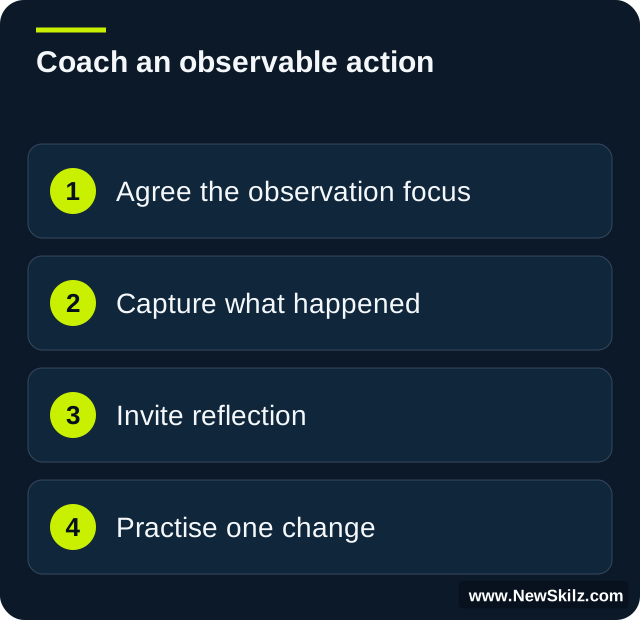
Agree the observation focus before the attempt

Select a small number of behaviours relevant to the scenario. For discovery, you might observe whether the seller follows the buyer’s answer, checks an interpretation and summarises the priority. For a demo, the focus might be connecting the task to approved capability and responding to an interruption.
Explain the purpose and boundaries of the practice. Participants need to know who sees feedback and how it will be used. Distinguish developmental rehearsal from any formal assessment your organisation runs. When observers know the focus, their notes are less likely to become a collection of personal presentation preferences.
Capture what happened before deciding what it means

Record a phrase, question or action and the buyer response. “You spoke over the buyer twice as they described the approval process” is observable. “You were not listening” is an interpretation. Evidence lets the participant recognise the moment and discuss it without arguing about a broad judgement.
Use a short note with three fields: observed action, apparent effect and question for the participant. Ask the person playing the buyer how they experienced the response. Connect feedback to the specific attempt and identify what the seller can refine.
Invite reflection before adding your view

Ask what the seller was trying to achieve and where they felt the conversation shifted. They may have noticed a difficulty the observer missed. Then share the specific evidence and explore it together. “When you offered the demo, the buyer had just raised an approval concern. What were you hoping the demo would clarify?” opens a useful discussion.
In an illustrative example, a seller jumps to an answer because they think silence signals weakness. The observer shows that the buyer was still explaining the requirement. The coaching priority becomes allowing the buyer to finish and checking the question, rather than a vague instruction to improve confidence.
Choose one change and practise it immediately

Agree a behaviour the seller can attempt in the same difficult moment. Rewind the scenario and let them try it. The second attempt tests whether the feedback was understandable and usable. It also gives the observer something concrete to compare.
- Name the moment to repeat.
- Agree the behaviour to change.
- Run the short conversation again.
- Ask what changed and what still needs work.
Keep strengths specific too. If a summary helped the buyer correct an assumption, explain which part worked. The seller needs to know what to retain as well as what to adjust.
Connect coaching to the next workplace opportunity
Finish with a realistic application plan. Ask where the seller will encounter a similar situation, what preparation they need and how the manager can review it. A short note might say: “In the next discovery meeting, pause after the buyer’s answer, explore one concrete example and check the summary before proposing a demo.”
Managers can calibrate by watching the same practice and comparing their evidence. Discuss differences in interpretation before turning them into scores. Revisit the participant’s priority after an appropriate workplace opportunity, acknowledging conditions that made application easier or harder. Coaching becomes useful through this continuity, rather than the volume of advice delivered once.
NewSkilz tailors observation prompts and manager practice to your sales conversations, role expectations and agreed coaching priorities.
Make it relevant to your team.
Use your goals, roles and real situations to choose the next useful step.