
“We already explained this to your colleague.” It is an awkward way to begin a technical meeting. A useful Account Executive–Sales Engineer handoff carries the buyer’s context, the questions still open and the purpose of specialist involvement. The briefing should help the next person make progress without forcing the customer to restart discovery.

Brief for the next conversation, rather than the account history

A CRM record can contain plenty of activity without explaining what the Sales Engineer needs to do. Start the handoff with the buyer’s objective and why the technical conversation is needed. Include the people attending, their roles and the criteria they have expressed. Identify which facts are confirmed and which remain assumptions.
Keep the note short enough to use. Link to approved supporting information where appropriate, rather than reproducing an entire account file. The Sales Engineer needs room to ask clarifying questions before accepting the proposed meeting plan. A handoff is a working conversation between colleagues, not just a forwarded document.
Use a brief with five essential fields

- Buyer situation: the task, current approach and stated difficulty.
- Decision purpose: what the upcoming meeting should help the buyer judge.
- Known requirements: confirmed needs and their source.
- Open questions: uncertainties, requested validation and relevant owners.
- Meeting roles: who opens, who demonstrates, who handles which questions and who closes.
Add promises already made, including anything requiring correction or approval. If the AE has suggested a capability without enough evidence, the internal briefing is the place to address it. Avoid letting the Sales Engineer discover the promise in front of the buyer.
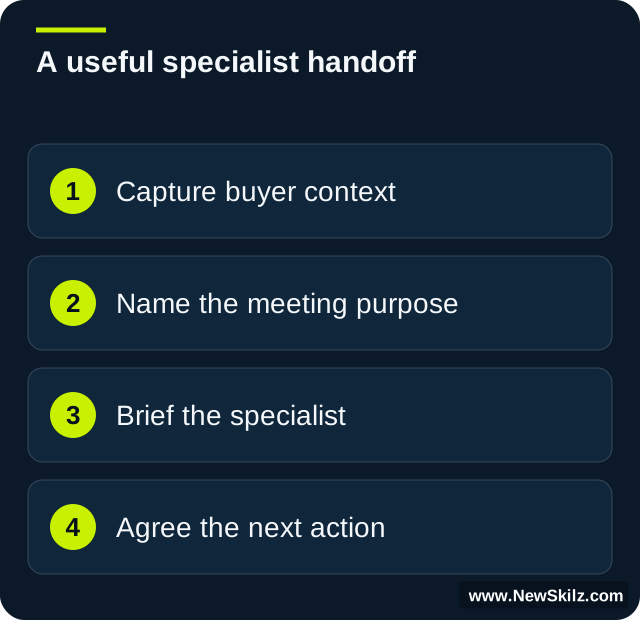
Show how context changes the specialist’s preparation
In an illustrative opportunity, the note says “customer wants integration”. The Sales Engineer prepares a general presentation. A fuller brief would explain that the customer wants to avoid re-entering approved orders, has not confirmed which system owns the record and needs to understand the division of responsibilities.
That context creates useful preparation questions. Which workflow is in scope? Who can confirm the source system? What approved product information is available? What needs investigation? The specialist can prepare a credible discussion without guessing the answer or promising an implementation before requirements are established.
Make the transition visible to the buyer
Open the joint meeting with a short summary and ask the buyer to correct it. Introduce the Sales Engineer by explaining their contribution: “We have briefed Priya on the order workflow and the ownership question. She will help us clarify what can be validated today and what needs a further technical review.”
The AE should remain engaged. Listen for changes to priorities, capture commercial implications and help reconnect detail to the buyer’s objective. The specialist can ask new questions without pretending everything was resolved previously. Good continuity means building on what is known, while being clear about what still needs discovery.
Rehearse the shared meeting and its close

Practise the briefing, opening transition and a difficult interruption together. An observer can check whether both colleagues describe the same objective, avoid unsupported claims and assign open questions clearly. Give the buyer role a new requirement midway through so the pair must adapt without contradicting each other.
Close the actual meeting with a shared summary: what was established, what remains uncertain and who will do the next piece of work. Debrief internally while the detail is fresh. Update the brief when the customer’s context changes. A handoff is successful when each conversation carries useful understanding forward, not when a calendar invitation has been accepted.
NewSkilz tailors joint role plays to your AE–SE responsibilities, approved proposition and typical buyer handoff difficulties.
Make it relevant to your team.

Use your goals, roles and real situations to choose the next useful step.