
One cohort gets a discussion, another gets a lecture, and a third misses the main activity because time runs short. All three attended the same workshop title. The programme owner now has to decide whether they received the same learning experience.

For training providers and corporate learning teams, consistency protects the approved programme. It matters when NewSkilz delivers an established workshop under the client's brand. The aim is to preserve objectives, essential content and delivery standards while agreeing how examples and facilitation can fit different audiences.
Define what must remain consistent

Identify the core elements before delivery begins: learning objectives, essential concepts, key activities, expected participant outputs and important scope boundaries. Explain why those elements matter, so facilitators can make sensible timing and discussion choices.
Agree which parts can vary. Role titles, examples and discussion prompts may benefit from audience relevance. Removing a core activity or adding an unapproved product explanation changes more than the local flavour. Give those changes an approval route rather than expecting facilitators to guess.
Release one coherent delivery set

Approved slides alone rarely express the whole programme. Bring facilitator guidance, participant tasks, examples and follow-up material into the preparation brief. Check that the activity names, instructions, timings and references agree.
A simple material record can show:
- The approved release and where it is held.
- The content owner and approval date.
- The audiences and cohorts it applies to.
- The essential elements to retain.
- Permitted adaptations and how to request others.
- What changed from the earlier release.
Use the client's existing working arrangements where they serve the need. Separate drafts from approved copies. A clear release record is more useful than an elaborate naming convention if facilitators still prepare from different attachments.
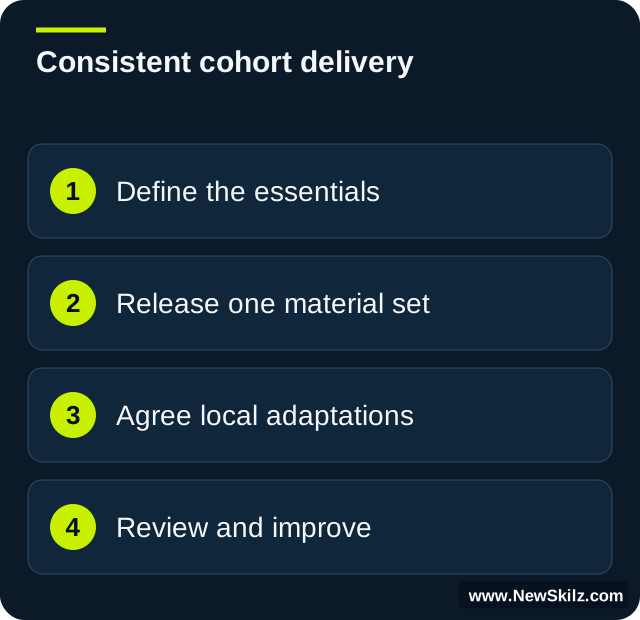
Agree local relevance without creating a new programme

Consider an illustrative provider workshop on manager decision conversations delivered to two regional cohorts. The same decision activity suits both, but participants use different role titles and encounter different scheduling pressures.
The content owner approves local terminology and two examples while retaining the activity's decision criteria. Facilitators receive the agreed examples alongside the common guide. They can make discussion relevant without changing what participants are asked to practise or produce.
If a facilitator believes the activity itself does not fit, record the reason for owner review. Useful local experience should improve the approved programme through a visible decision, rather than quietly creating a separate version.
Review delivery against the intended experience

Ask facilitators which core activities were completed, what participants produced and where clarification was needed. Capture significant adaptations or omissions with their reasons. Compare that information across cohorts without expecting every discussion to sound identical.
Separate three kinds of finding: a content question, a preparation dependency and a facilitation choice. Each needs a different response. A missing participant prerequisite may require a readiness change; an unclear instruction may require a material revision; a timing choice may need a delivery discussion.
Where delivery is under the provider's brand, agree how participant questions, feedback and issues return to the provider. Keep the client's approved programme and communication expectations visible throughout.
Make improvements part of the next release

Have the relevant owner approve material changes and tell facilitators what they need to do differently. State the affected cohorts, the release that applies and whether preparation needs revisiting. Check the full delivery set when a change touches more than one document.
Keep the delivery record clear about which version was used. The practical questions are: did participants receive the intended core experience, were adaptations approved, and what should change before the next cohort? Those answers help an established workshop remain coherent while the audience changes around it.
Make it relevant to your team.
Use your goals, roles and real situations to choose the next useful step.