
Attendance and completion tell you that people reached a programme milestone. They do not show whether someone can use the learning in a real situation. A participant may understand a process and still lack the access, permission or opportunity needed to apply it.

Application tracking should help the programme owner decide what support is needed next. Shape it around the audience's work, rather than collecting impressive-looking evidence with no clear use. Agree the method with managers and relevant owners before the programme ends.
Choose a task you can recognise

Describe the application you want to see. “Better stakeholder management” is difficult to observe consistently. “Clarifies the decision required, names the owner and records the next action in a project discussion” is a more useful starting point.
For a process programme, the task might be completing a request with the right information. For manager development, it might be preparing and conducting a feedback conversation. Ask the business owner what a useful attempt looks like, including where judgement and context matter. Avoid turning complex work into a checklist that rewards mechanical compliance.
Agree when the opportunity will occur

The review point should fit the work. A weekly task offers a different application opportunity from a conversation that happens occasionally. Ask participants and managers when the task is likely to arise and what support is appropriate before it does.
Record the plan in plain language: the task, the anticipated opportunity, the person supporting it and the evidence to discuss. If the opportunity does not occur, record that fact. An absence of evidence can reflect timing rather than a lack of learning.
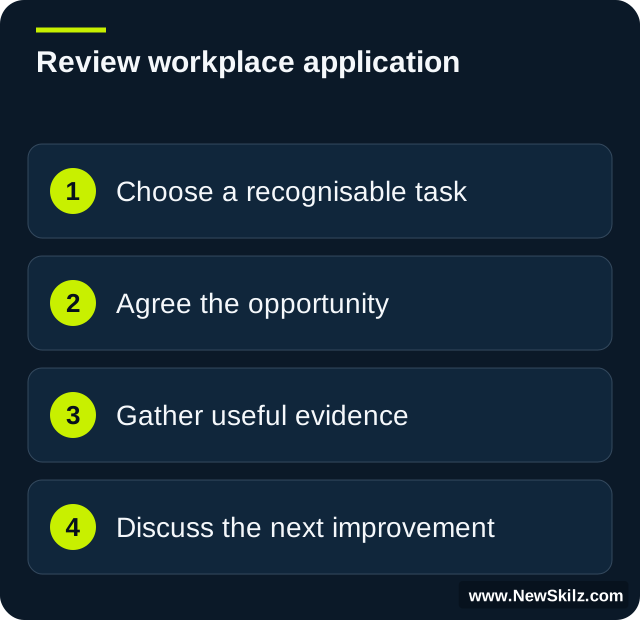
Collect enough evidence to support a conversation
Choose a proportionate combination of participant reflection, manager observation and relevant work examples. Use existing records where appropriate instead of asking people to create a second version solely for the programme.
- Attempt: what did the person try in the working situation?
- Observation: what happened that relates to the agreed task?
- Barrier: what made application difficult?
- Support: what would help the next attempt?
Keep sensitive customer, employee or operational information out of unnecessary programme records. Follow the client's arrangements for access and record handling. Evidence should be useful to the agreed owners, with a clear reason for collecting it.
Read an illustrative example without jumping to a verdict

Illustrative SaaS adoption example: go-live is a date; adoption is a job. Training is complete and the system goes live on schedule. In the following week, users keep exporting records to an old spreadsheet because they are unsure who now approves corrections. A completion report misses the working problem.
The programme review defines role-based tasks: a user submits a record, the approver checks it and the support team routes exceptions. Managers look for these actions in normal work and record barriers. The process owner clarifies the approval rule; technical owners resolve access or configuration questions. A short, targeted practice session addresses the remaining learning need. Each response has an owner and a review point.
Application evidence helps identify these possibilities. It rarely proves a single cause on its own, particularly where processes, systems or team responsibilities are changing at the same time.
Give findings somewhere to go

Review patterns at a rhythm that fits the programme. Group issues by their likely owner: content clarification, manager support, operational process, access or an unresolved decision. Assign the next action and bring the result back into the review.
NewSkilz coordinates the agreed follow-through, bringing actions, owners and review points into one working record. Business and technical specialists lead the decisions in their areas, so each barrier has a clear route to resolution.
Keep the review focused on improvement
Ask what the evidence allows you to say and what remains uncertain. Share useful examples and practical adjustments without treating an isolated observation as a verdict on a participant or the whole programme.
A small, maintained application record can support better decisions than a large collection of unchecked data. Give each field a purpose, each review an owner and each recurring issue a next step.
Make it relevant to your team.
Use your goals, roles and real situations to choose the next useful step.