

Make the role clear before testing confidence

A new manager may understand the team’s work very well and still be unsure what changes when they become responsible for other people. Technical expertise does not automatically explain how to set expectations, delegate, give feedback or involve the right support.
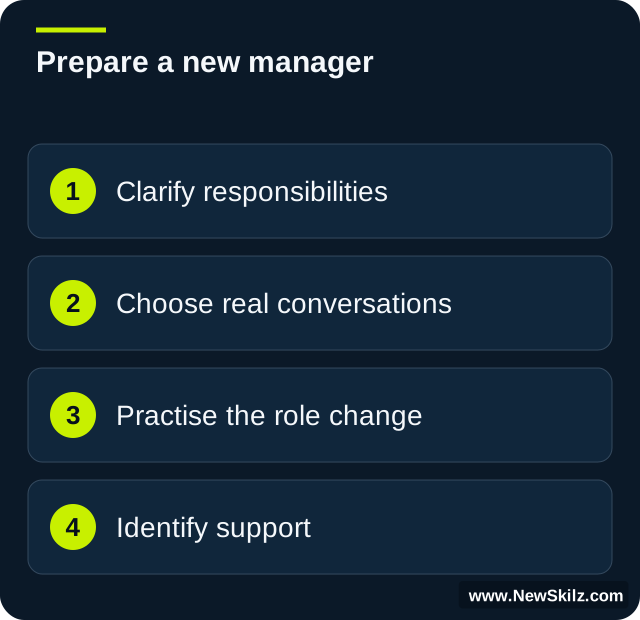
Start with the organisation’s actual role. What decisions can this manager make? What must they check? Which responsibilities remain with their own manager, HR or another function? Clarifying those boundaries gives preparation a useful foundation and prevents practice from teaching authority the person does not hold.
Confidence is helpful, but readiness should be discussed through tasks the role requires. Ask what the manager needs to handle in the first few weeks and where uncertainty could affect the work.
Prepare for the conversations already on the calendar

List the likely situations: the first team meeting, a one-to-one, a delegation brief, a priority conflict and a conversation about an unmet expectation. Choose a small set that reflects the role, team and organisational context. A manager of experienced specialists may face different conversations from a supervisor of new starters.
- How will I explain my responsibilities and expectations?
- How will I find out what support each colleague needs?
- How will I agree ownership of work?
- How will I give a clear update to my own manager?
- Which issues must follow an approved organisational process?
These questions give training a brief. They also expose what the organisation needs to provide: policy guidance, useful contacts, working examples and clear approval routes. A workshop cannot supply missing internal expectations by guessing them.
Rehearse the move from colleague to manager
Consider an illustrative situation: a specialist becomes manager of a team that includes former peers. They want to keep positive relationships but now need to allocate work and discuss delivery expectations. A useful opening for the first team conversation might be: “I know the work from our previous roles together. My responsibility now includes helping us agree priorities and making ownership clear. I want to hear what support would help and explain how we will handle decisions.”
The wording needs to fit the organisation and person. The purpose is to acknowledge the change without making a theatrical announcement of authority. Practise answering questions about priorities, support and decisions. Notice where the manager becomes vague because they have not yet received a clear answer themselves.
Include a realistic challenge. A former peer might ask why the manager is now reviewing a task they used to share. The manager can explain the responsibility and review purpose respectfully, then listen to the concern. Rehearsal should give them space to test that exchange rather than memorise a single ideal script.
Build a support map, not a heroic expectation

Identify who the new manager can contact for different questions. Their own manager may clarify priorities; an experienced colleague may offer examples; the relevant organisational function may explain approved procedures. Make the route clear enough to use when an issue appears.
Agree regular early check-ins with their manager. Use real situations rather than a general “How is it going?” Ask what decision was difficult, which conversation is coming next and what information is missing. Support can then be matched to the work.
Clarify what needs escalation and what the manager can handle independently. Asking for appropriate support is part of carrying responsibility. Leaving the new manager to discover boundaries through avoidable mistakes is a weak substitute for preparation.
Use the first attempts to shape the next practice

After an actual conversation, review the intended outcome, what the manager said, the response and the next action. Identify one adjustment. An early delegation attempt might reveal that the outcome was clear but the decision boundary was missing. That becomes a focused practice task.
Keep preparation responsive to the manager’s experience and team needs. Some will need more practice in feedback; others in facilitating decisions or communicating priorities. Topics are starting points, and the role provides the detail.
NewSkilz builds tailored first-time manager practice from your leadership expectations, approved examples and responsibilities. Managers practise the conversations they are about to face through realistic role play and use specific feedback to refine their approach. Your organisation supplies the role clarity and support; the practice helps them use it in real work.
Make it relevant to your team.
Use your goals, roles and real situations to choose the next useful step.