

Write the decision before writing the agenda

A meeting titled “Project update” can hold several different jobs: sharing information, solving a problem, agreeing a priority and approving a change. When those jobs blur together, people may leave with different ideas about what was decided. Begin with a sentence naming the decision the group needs to make.
For example: “Agree which two activities we will complete this month within the available team capacity.” That statement helps you identify the information, participants and authority required. If the meeting is only for information, say so. People should know whether they are being asked to contribute, recommend or decide.
Illustrative example from technical work: A developer wants to ship a feature, Support needs escalation guidance and Security has an unanswered review question. Define the decision as “Agree whether the release is ready and what evidence is still required.” Let each owner explain the constraint. Record the authorised decision, unresolved checks, responsible people and next review point.
Prepare the conditions for a decision

Check who can make the decision and who needs to inform it. A person affected by an outcome may need to contribute even if they do not hold approval authority. Someone who can provide a missing fact might join one part of the meeting rather than the whole discussion.
Send a short preparation note with the decision, the relevant options, known constraints and specific questions. Distinguish facts from assumptions. Ask participants to bring information you actually need, rather than a general update deck. Where the decision maker cannot attend, agree how the meeting’s recommendation will reach them and when a response is needed.
- What are we deciding?
- Who has the authority to decide?
- Which criteria will guide the choice?
- What information is available or missing?
- What will happen if we cannot decide today?
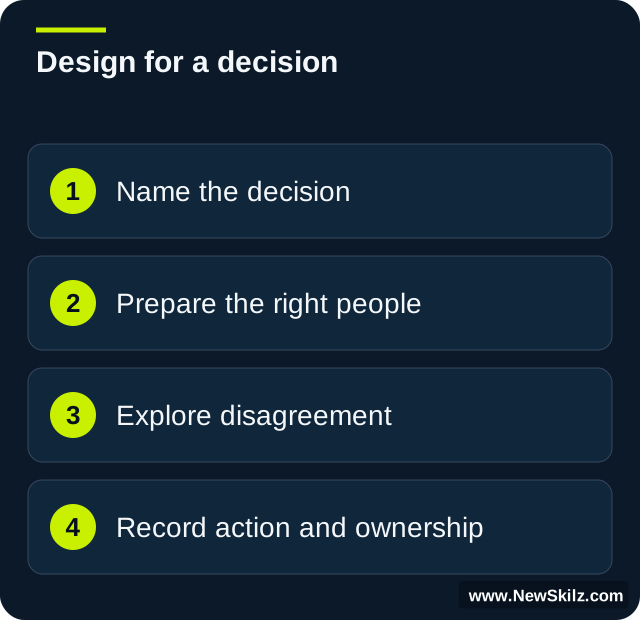
Give disagreement a place in the discussion

In an illustrative planning meeting, Operations wants a process workshop this month, while team managers want time to resolve a backlog. Begin by confirming the shared constraint: only one session can run before month-end. Ask each group to explain the work it wants to support and the cost of waiting. This is more useful than asking everyone whether they “agree with training”.
Summarise the options in neutral language and compare them against the agreed criteria. Invite the quieter participants who hold relevant information. If one voice dominates, redirect: “We have heard the delivery case. I want to check the workload implications before we choose.” That intervention explains its purpose and keeps the discussion connected to the decision.
Separate a new issue from a repeated point. A genuine dependency may change the options; repeating a preference louder does not add information. Record unrelated matters for a later conversation with an owner, rather than letting them consume the current decision.
Close with the decision and its practical meaning
Before moving on, state what has been agreed, by whom and with which conditions. “We are running the workshop” is incomplete if someone still needs to approve the date or release participants. Make that condition explicit. If there is no decision, record the precise gap and the action needed to close it.
A short decision record can use five lines: Decision. Reason. Owner. Next action and date. Review or escalation trigger. Ask the relevant owners to confirm their responsibilities. Record unresolved objections accurately; do not describe a disputed recommendation as unanimous approval.
In the example, the group might agree to run a shorter process session after the backlog review, with one manager checking capacity by Thursday. The record should name that dependency and who confirms it. Clear wording helps someone who missed the meeting understand what is now expected.
Judge the next meeting by what it needs to resolve

Circulate the decision record promptly and review the actions through the appropriate existing channel. Do not schedule another full meeting automatically. Sometimes an owner can provide the missing fact and the authorised decision maker can respond directly. Sometimes changed conditions require a further discussion.
For the next meeting, ask what remains open rather than repeating the original agenda. This keeps follow-through connected to the actual state of the work. Notice whether the decision was implemented, what prevented it and whether the record was clear enough to support action.
Meeting facilitation practice is most useful when it mirrors your meeting types, decision rights and organisational expectations. NewSkilz builds role plays around a real decision your team needs to handle, with feedback on how they set the purpose, draw out views and close. The useful outcome is a meeting process they can explain and practise at work.
Make it relevant to your team.
Use your goals, roles and real situations to choose the next useful step.