

Choose an opportunity before choosing an ambition

“Become a better coach” is a worthwhile ambition, but it does not tell a manager what to do on Tuesday. Leadership learning becomes easier to apply when it connects to an upcoming situation: a one-to-one, a team decision, a delegation brief or a feedback conversation.
At the end of a workshop, identify one relevant opportunity and the behaviour the manager wants to try. Keep it within their responsibilities and the organisation’s expectations. The aim is to create a real next attempt, rather than a long list of changes competing for attention.
Preparation can begin before the workshop. Ask participants to bring a suitably anonymised conversation they expect to handle. That gives practice and follow-through a shared context, with enough detail to make the rehearsal useful.
Make the action small enough to observe

An action such as “listen more” needs a visible expression. A manager might ask the colleague to outline their options before offering advice, then summarise what they heard. Another might close a meeting by reading back the decision, owner and date. The action should be specific enough for the manager to notice whether it happened.
Use this planning sentence: In this situation, I will try this behaviour, because it should help this part of the work. I will look for this sign that it was useful. I will review it with this person on this date. Choose an observable sign, such as a clearer agreement, a specific next action or more useful questions.
- Which real situation will provide the next attempt?
- What will I do differently?
- What preparation or permission do I need?
- Who can provide an informed observation?
- When will I review the attempt?
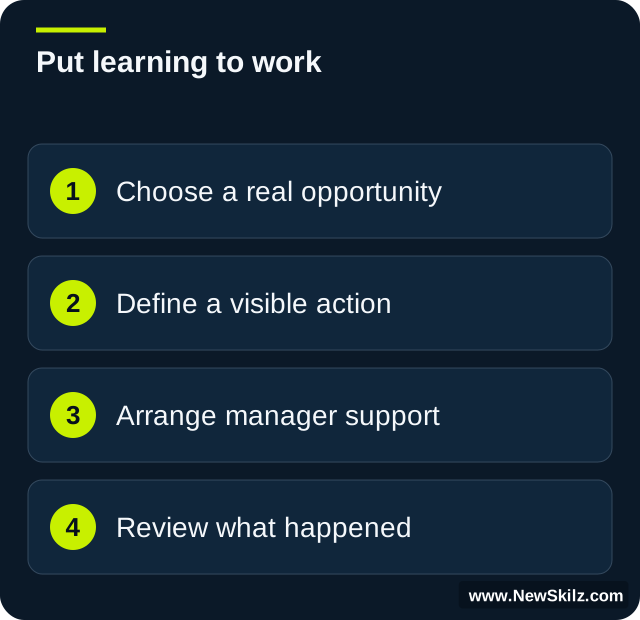
Arrange support around the actual work

In an illustrative example, a manager practises giving clearer delegation briefs. Their next opportunity is assigning preparation of a monthly team update. They plan to clarify the intended output and decision boundary, then ask the colleague to describe the approach. Their own manager agrees to review the brief beforehand and discuss the attempt afterwards.
The support is tied to a task that already needs doing. It does not depend on inventing a separate project. A short peer conversation or existing one-to-one may provide an appropriate review, provided the person understands the behaviour being practised.
Check workplace conditions too. A manager may have learned a facilitation approach but lack authority to change a meeting format. They may need agreement from the meeting owner. An application plan should include those dependencies, rather than treating every obstacle as a failure of motivation.
Review what happened with enough detail to learn

A follow-up question such as “Did you use the training?” can produce a quick yes and little insight. Ask about the specific situation. What did the manager try? What response did they notice? Where did they revert to their usual approach? What would they adjust next time?
Separate completion from usefulness. A manager may have used a conversation framework but still need a clearer opening. Another may have adapted the wording successfully because it fitted the colleague and context. Discuss the effect on the work rather than demanding perfect repetition of workshop phrases.
If the opportunity did not arise, choose another realistic one. If the action was avoided, explore why. The review should lead to a next attempt or a support decision, rather than merely recording that an action plan exists.
Design follow-through as part of the programme

For an organisation, agree the application arrangements before delivery. Identify participant responsibilities, manager support, suitable review points and any materials that will remain available. Keep the request proportionate to the programme and existing workload.
Useful evidence might include a manager’s account of a real attempt, an observed conversation or a revised meeting record. Collect only what serves the agreed purpose and handle workplace information appropriately. Attendance and satisfaction can tell you about participation and experience; they do not by themselves show how a manager used the skill.
NewSkilz shapes leadership practice and follow-through around your managers’ roles, real tasks and organisational expectations. Agreed prompts, feedback tools and review arrangements give learning somewhere to go. Connect preparation, practice and manager-led review so participants have a clear next step at work.
Make it relevant to your team.
Use your goals, roles and real situations to choose the next useful step.