
A strong sales manager can help a new starter interpret the playbook, practise difficult moments and recover from mistakes. Relying on that one person's spare time makes the programme fragile. Create a coaching routine others can understand, with realistic practice tasks and clear boundaries around product and commercial advice.

Choose a small recurring practice task

Begin with a conversation new starters regularly face: opening discovery, explaining an approved capability, handling a concern or briefing a Sales Engineer. Choose one task per coaching session. A broad instruction to “run a role-play” leaves the manager to invent context and feedback under time pressure.
Provide a short scenario, buyer role notes and a few observation criteria. Link the task to the existing onboarding content. Managers should be able to identify what the learner is practising and which source material supplies the facts.
Use the same coaching rhythm

A repeatable sequence helps managers spend their time observing and coaching rather than designing the session. Keep the learner active and protect the second attempt. The review should lead to a behaviour they can test immediately.
- Confirm the task and feedback focus.
- Run a short attempt using approved scenario facts.
- Ask the learner what they noticed.
- Share one specific observed example.
- Agree one adjustment.
- Replay the moment and record the next focus.
Build this routine into your sales methodology and managers’ coaching rhythm, using the scenarios and feedback priorities that fit your team.
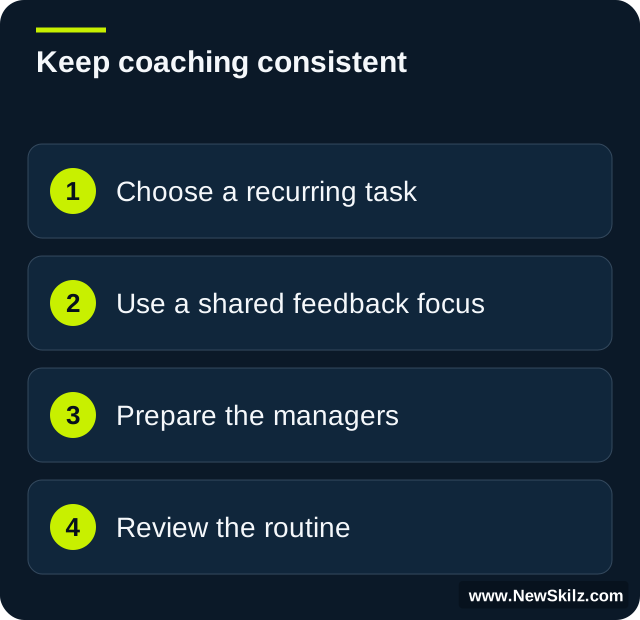
Prepare managers to give comparable feedback
Ask managers to review the same short practice attempt and discuss what they observed. Compare evidence, not personal preferences. One person may prefer a particular opening phrase; the useful question is whether the opening established a relevant purpose and gave the buyer space to contribute.
Illustrative example: two managers coach different new starters on discovery. One says “ask more questions”; the other says “move to the demo sooner”. Reviewing the agreed scenario reveals the intended behaviour: explore the buyer's stated difficulty enough to summarise it accurately before deciding the next step. Both managers can now coach against that criterion while allowing different conversational styles.
Share responsibility without losing ownership

Decide who can facilitate routine practice and who handles factual questions, readiness decisions and programme changes. Sales Enablement or L&D colleagues may help run scenarios, while product owners confirm facts and managers authorise customer-facing responsibilities.
- Who maintains the approved scenario pack?
- Who coaches the selected conversation behaviours?
- Who answers product or commercial questions?
- Who confirms readiness and required support?
- Who approves an update for the next cohort?
Provide a route for questions that facilitators cannot resolve. Sharing the work should not mean asking everyone to become an expert in every part of the product or programme.
Keep the routine useful over time
“This week's task: [conversation]. Source: [approved material]. Observe: [behaviour]. Replay: [moment]. Next action: [practice or knowledge task]. Owner: [coach or content lead].”
Review the pack when the playbook changes or repeated learner difficulties reveal a gap. Retain useful examples, retire outdated claims and record approved changes. A reusable scenario saves preparation only when its facts and purpose remain clear.
Equip your managers or L&D colleagues to train future cohorts with NewSkilz scenarios, facilitator guidance and practical preparation. Agree the toolkit, internal-use rights and any ongoing coaching or refresh support around your programme.
Make it relevant to your team.
Use your goals, roles and real situations to choose the next useful step.