
A scenario pack can outlast the initial workshop, but only if someone can use it and keep it current. A page of buyer dialogue is not enough. The next facilitator needs the learning purpose, approved facts, instructions, feedback criteria and permission boundaries. Make the handover part of the programme design rather than an end-of-project download.

Give every scenario a clear job

Name the role, conversation and behaviours the exercise develops. Explain what internal learning the participant should complete first. Keep buyer notes consistent with the approved context and make clear where the buyer may respond naturally.
Include unknowns deliberately and identify how they should be handled. If a question has no confirmed product answer, the facilitator should know the intended behaviour is clarification and escalation. Otherwise a future session may reward whoever guesses most convincingly.
- Purpose and target role.
- Preparation and approved source references.
- Seller task and buyer context.
- Instructions, timing and participant outputs.
- Observation criteria and debrief prompts.
- Approved variation and escalation route.
Prepare the internal facilitator through practice

Ask a manager, Sales Enablement or L&D colleague to run one scenario using the pack. Observe the briefing, buyer role and feedback discussion. Can they distinguish an inaccurate claim from a conversation improvement? Can they keep the replay focused on one change?
Illustrative example: a manager inherits a scenario about a competitor's lower price. The first teach-back becomes a debate about discounting. The guide clarifies that the task is to explore the buyer's concern, use approved evidence and recognise commercial authority boundaries. The manager tries the debrief again using those criteria. The pack now supports a useful exercise rather than an unplanned pricing lesson.
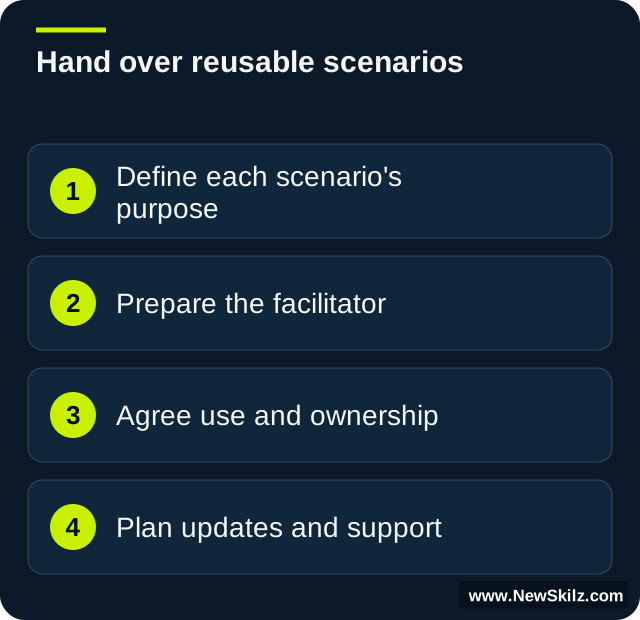
Keep ownership and use understandable

Name the internal owner responsible for keeping product facts and playbook references current. Agree the outputs and permitted internal use of materials in the programme scope. Record the agreed rights for client content, bespoke materials and reusable methods so your team knows how to use the pack.
Record where the authoritative pack lives and how changes are approved. Future facilitators need a reliable version, not several similarly named files. Keep a short change history that explains which scenario was updated and why.
Create a small refresh process

- Capture significant questions and difficulties from each cohort.
- Separate factual corrections from proposed design changes.
- Refer product or playbook updates to the relevant owner.
- Approve changed buyer notes, criteria or instructions.
- Update the pack and communicate the version.
- Test a substantially changed activity before wider use.
Review the pack when source content changes and when repeated practice reveals a gap. Do not add every unusual buyer question to the next cohort's workload. Choose updates that support the agreed roles and objectives.
Leave a handover note someone can follow
“Pack owner: [name]. Approved sources: [references]. Facilitators prepared: [people and evidence]. Permitted variations: [choices]. Questions go to: [owner]. Current version: [identifier]. Review trigger: [source change or cohort finding].”
Include one completed example of a coaching note and one example of an escalation. These show how the process should work without scripting every conversation. Ask the next facilitator to explain the route from preparation through attempt, feedback, replay and follow-up.
Build lasting onboarding capability with reusable NewSkilz scenarios, facilitator guidance and Train the Trainer. Agree the pack and any refresh or coaching support, then give prepared colleagues the tools to run future cohorts using your current product information and playbook.
Make it relevant to your team.
Use your goals, roles and real situations to choose the next useful step.