
“Could we add another role to the cohort?” sounds manageable. Then the example needs adjusting, the room no longer fits, the joining instructions need replacing and the facilitator requires a different briefing. The request was small. The programme effect was larger.

Changes are part of useful programme management. New information should influence delivery. The discipline is to understand the consequences and agree the decision, rather than accepting every request as a harmless calendar edit or defending the original plan regardless of need.
Understand the reason behind the request

Ask what the change is intended to achieve. Is a new audience facing the same task, or a different one? Is a date moving because the learning is less urgent, or because an essential dependency is late? The answer influences which options make sense.
Record the request in language the programme owner can understand: the proposed change, the reason, the affected cohorts and the latest useful decision date. Ask the requester to identify any known constraints. Avoid treating a suggested solution as the only route to the underlying need.
Check the connected work before estimating the effort

Review the effect across the programme, including preparation that has already happened:
- Audience needs, role mix and prerequisites.
- Learning objectives, examples and approved materials.
- Facilitator preparation and delivery capacity.
- Dates, locations, access and operational cover.
- Participant and manager communications.
- Application tasks, reviews and handover records.
Consult the owners of affected work. A coordinator can gather the impacts, but should not invent a technical estimate or approve a content change on another owner's behalf. Distinguish confirmed consequences from questions still being investigated.
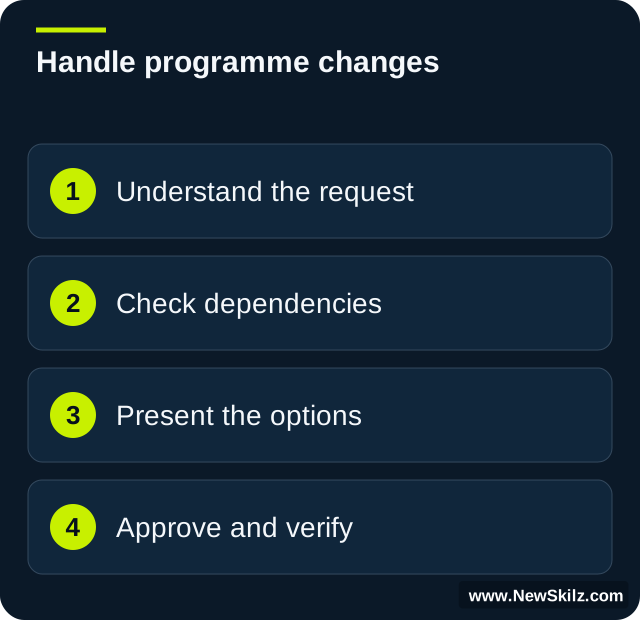
Present options with honest trade-offs

Consider an illustrative programme preparing managers to use a revised performance conversation framework. A sponsor asks to include new team leaders in a cohort already briefed for experienced managers. The content owner identifies a preparation gap; the facilitator suggests a short prerequisite briefing.
The programme owner could approve that preparation, create a separate cohort or accept a revised session focus. Each choice affects time, relevance and the agreed objective. Present those consequences clearly. “We can fit them in” is incomplete if fitting them in changes the experience for everyone else.
Where additional work affects scope or fees, route it through the agreed commercial process. Do not hide the effort inside an optimistic delivery plan or imply that every change is automatically included.
Make the approval usable
Record who made the decision and what they approved. Include the affected outputs, responsible owners and dates. Confirm any conditions, such as access being available or a content owner approving the new example.
Approved: include the new team-leader group after completing the agreed prerequisite briefing. Content owner will approve the briefing; local managers will confirm attendance. Coordinator will update the cohort list and joining message after both conditions are met.
Update the authoritative programme plan and the related records. Tell affected people what they need to do differently. Retain enough history to understand the change without making people compare several old schedules to find the current answer.
Check the result before calling the change closed

Confirm that the approved actions happened and that the affected dependencies remain workable. A decision to move a session is incomplete if the venue, facilitator or participants still hold the earlier date.
After delivery, review whether the change addressed the original need and what it revealed about future planning. Some recurring requests belong in the programme design. Others reflect unusual circumstances. Capture that distinction so the next cohort benefits from learning without accumulating every exception as a permanent rule.
The useful questions are straightforward: what is changing, why, what else moves with it, who decides and who will update the work? Clear answers give flexibility a structure people can trust.
Make it relevant to your team.
Use your goals, roles and real situations to choose the next useful step.