
A new seller may know the proposition and still struggle to begin a meeting. They have to introduce themselves, establish relevance, understand the buyer and keep track of the next step at the same time. Give that first conversation a place in onboarding, with a realistic attempt and feedback before the customer provides both.

Prepare a purpose the buyer can recognise

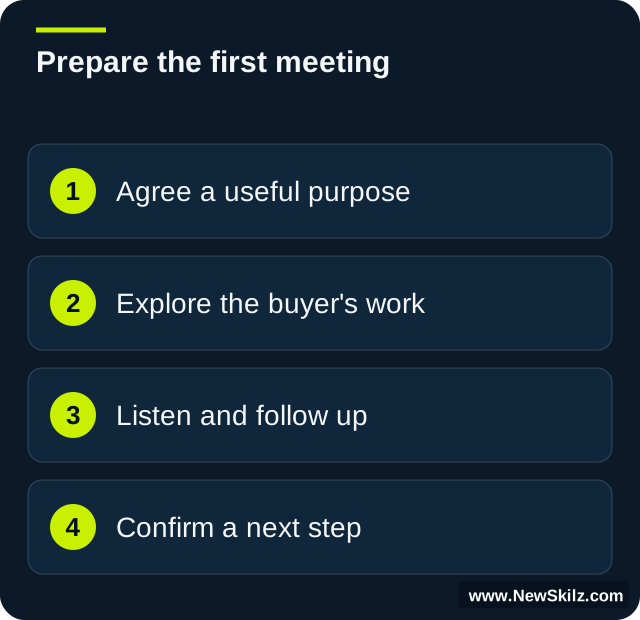
Ask the new starter to describe why the meeting is useful for this buyer. A generic opening about the company's history may be accurate, but it does not help the buyer understand the conversation ahead. Use the approved proposition and what is already known about the buyer to form a brief, relevant introduction.
Practise agreeing the purpose and available time. The seller should be able to ask what the buyer wants from the meeting and adjust the emphasis within their role. This gives the conversation a shared direction rather than treating an agenda as something announced to the customer.
Give discovery a small, workable route

Choose a few starting questions that fit your buyers, then practise following an answer. A long question list can become an interrogation if the seller never responds to what they hear. Include a prompt to clarify the current task, explore the difficulty and check why it matters.
- What are you trying to achieve in this area?
- How does that work today?
- Where does it become difficult?
- What happens when that difficulty appears?
- Which part would you most like to improve?
These are starting points to tailor, rather than a universal qualification method. Your team retains ownership of its playbook and sales methodology.
Use a buyer response that demands listening

Illustrative example: the buyer says, “Our dashboards are a mess.” In a practice meeting, the new seller first responds by describing dashboard features. The coach pauses afterwards and asks what “a mess” meant. On the second attempt, the seller explores who uses the reports, which task is difficult and what decisions are delayed. Only then do they connect relevant, approved capability to the stated priority.
Give the buyer enough context to answer consistently, but allow natural follow-up. Avoid a scenario in which every question earns an obvious hint. The seller needs to decide what is useful to explore.
Rehearse the closing as a real agreement

New starters can concentrate so hard on the main discussion that the final minute becomes “I will send something over.” Practise a concise summary of the buyer's priority and a next step with a purpose, owner and timing. Keep any commitments within the seller's authority.
- Summarise what the buyer wants to address.
- Check that the summary is accurate.
- Explain the proposed next step and why it is useful.
- Confirm who should participate or provide information.
- Agree when the action will happen and what will be sent.
A first meeting need not end with a demonstration. The appropriate next step follows the buyer context and the team's approved process.
Observe three things and run the meeting again

Keep the feedback manageable: Was the purpose clear? Did the seller follow a meaningful answer? Was the next step understood? Ask the learner to reflect first, then give examples from the attempt. Select one improvement for the replay instead of correcting every phrase.
“You asked about the process, but moved on before exploring the delay. In the next attempt, use that answer to ask what the delay affects, then check your summary.”
Use the same buyer situation for the replay so the seller can feel the effect of the adjustment. Later, vary the context to check that the structure travels beyond one rehearsal. NewSkilz tailors this practice around your buyers and approved information, helping new starters put your product knowledge and playbook into practice in customer conversations.
Make it relevant to your team.
Use your goals, roles and real situations to choose the next useful step.