
A completion checklist tells you what a new starter attended or finished. Readiness asks what they can do in the role and what support they still need. The two belong together. Define the customer-facing tasks before creating an assessment, so the evidence is useful to managers rather than another box to tick.

Map the role's first responsibilities

Identify the work a new starter will actually own during the next stage of onboarding. An Account Executive may lead an opening discovery conversation. A Sales Engineer may clarify a technical requirement and explain an approved demonstration. A Customer Success colleague may explore an adoption concern and agree an appropriate follow-up.
Use the organisation's role boundaries, rather than assuming every SaaS team divides work the same way. Confirm which meetings the person can lead, which require support and which commitments need another owner's approval. These decisions make readiness specific.
Choose a few observable criteria
For each responsibility, describe actions a manager can notice. Avoid broad labels such as “commercial confidence” unless you explain the behaviour behind them. A criterion should guide preparation and feedback as well as review.
- Opens the conversation with a relevant agreed purpose.
- Follows a buyer answer to clarify the requirement.
- Explains approved information without inventing claims.
- Recognises a question outside their knowledge or authority.
- Captures a useful summary and next step.
Select the criteria that matter to the task. Assessing all of them in every exercise can overload the learner and obscure the development priority.
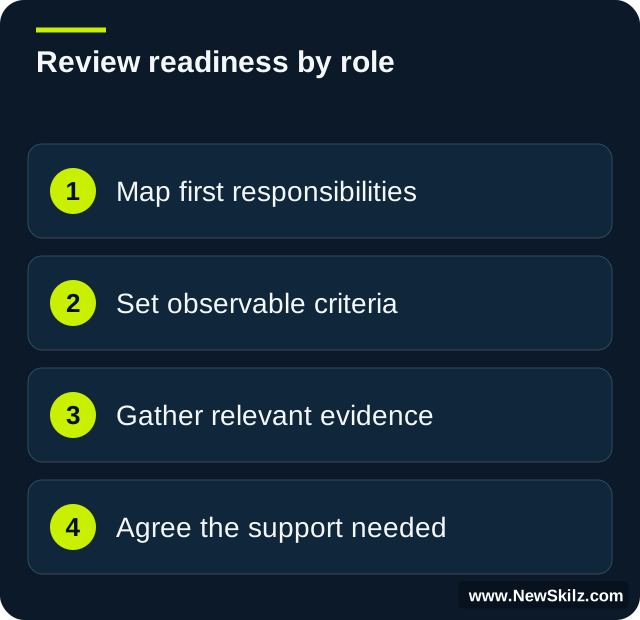
Collect evidence that fits the decision

Use a realistic attempt with approved scenario facts. Explain what the observer will review and give the learner the preparation expected in the actual role. Separate factual knowledge from conversation behaviour: a correct answer read from a source may show safe use of information, while a natural follow-up may show listening.
Illustrative example: a new Sales Engineer must support a demonstration with an Account Executive. The review uses a buyer requirement, an approved demo route and an unresolved integration question. The learner explains the relevant workflow and identifies where a specialist confirmation is needed. The manager records readiness for supported demonstrations, with further practice needed before leading a more complex technical conversation.
Make the support decision explicit

Readiness does not have to be a blunt pass or fail. Use decision categories agreed by the team, such as ready for the specified task, ready with named support or more development required. Define what each means in practice and who authorises customer-facing work.
- Agree the role task and readiness criteria.
- Run an attempt under realistic preparation conditions.
- Record specific evidence against the criteria.
- Discuss the learner's own reflection.
- Confirm the support or development decision.
- Set a follow-up attempt or review point.
A workshop facilitator can supply observations; the client's authorised manager owns the employment and operational decision. Keep that responsibility clear in the programme scope.
Use a readiness record that points forward
“Task reviewed: [role responsibility]. Evidence observed: [specific actions]. Current support: [arrangement]. Development focus: [one priority]. Next check: [task and date]. Decision owner: [manager].”
Use the record to plan coaching, rather than file it away as an onboarding result. If several learners struggle with the same criterion, review the underlying learning and scenario briefing before concluding that each needs individual remediation.
NewSkilz helps translate client-owned onboarding information into role-specific practice, observation and feedback. Clear readiness criteria make that work more useful: managers can see what the learner attempted, what changed and where support should continue. Use that evidence in your team's readiness decisions and ongoing coaching.
Make it relevant to your team.
Use your goals, roles and real situations to choose the next useful step.