
Knowing a capability and explaining its relevance are different tasks. A new starter can pass a product assessment yet list features when the buyer wants to discuss a working problem. Add a conversation task to the approved product learning: explain one relevant capability in the buyer's context, check understanding and stay within what the product information supports.

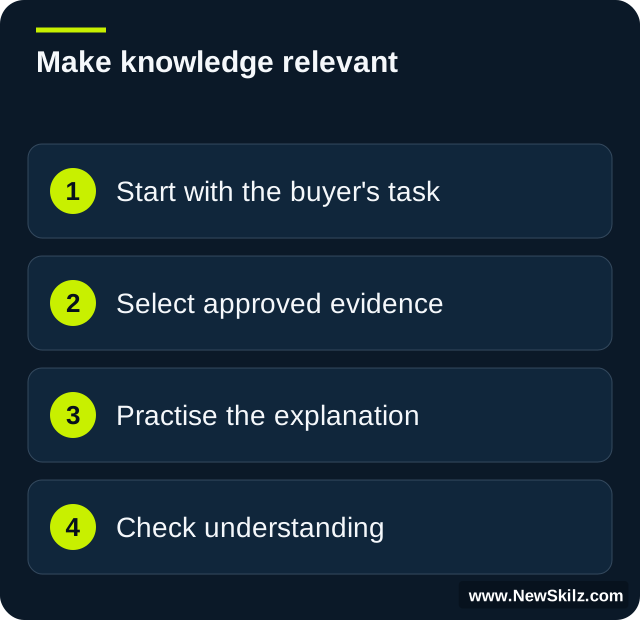
Start with a buyer task

Choose a task your actual buyers recognise. What are they trying to do, what makes it difficult and what consequence have they described? Use approved buyer context rather than inventing a problem merely because a feature can solve it.
Ask the learner to name the connection before giving the explanation. “This feature is useful” is too broad. “This capability relates to the buyer's need to review a specific workflow” gives the seller a reason to include it. If the connection is weak, the right move may be another question rather than a longer product description.
Build a small evidence-backed explanation

Have the learner structure their response around the buyer's stated priority, the relevant approved capability and the evidence they may use. Include limitations or dependencies where those are material. Your product, technical and commercial owners remain the source of truth for factual claims.
- Context: what the buyer said they need.
- Capability: the specific approved function relevant to that need.
- Evidence: the approved example or demonstration.
- Boundary: what needs checking or a specialist answer.
- Check: a question about usefulness or fit.
Make each element concise enough to use in a conversation. The structure should help the seller think, rather than become a new script they recite regardless of the buyer's response.
Practise relevance with a realistic interruption

Illustrative example: a new seller explains an approved reporting capability. The practice buyer interrupts: “We already have reports. Our problem is agreeing which figures to use.” The learner must stop the feature tour, clarify the disagreement and decide what information is missing. They may identify a relevant approved explanation, or conclude that a specialist conversation is needed.
The useful behaviour is responding to the buyer's point. Rewarding a learner for finishing the presentation despite the interruption teaches the wrong lesson. Feedback should consider what they understood and how they adjusted.
Keep the source trail visible

For each explanation task, record the product source and the owner who approved the scenario's facts. Keep a version reference so future cohorts do not practise outdated capabilities. Do not turn a learner's confident phrasing into an approved promise merely because it sounded persuasive.
- Select a buyer priority and relevant product information.
- Confirm the factual boundaries with the source owner.
- Ask the learner for a short explanation.
- Add a plausible buyer question or interruption.
- Review relevance, clarity and claim accuracy.
- Repeat with one adjustment and capture any unanswered question.
If the exercise exposes a product-knowledge gap, route it to the internal content owner. Conversation practice can reveal missing knowledge; it should not fill the gap with a facilitator's guess.
Use an explanation prompt in manager coaching

“You said [buyer priority]. The relevant approved capability is [specific function], which we can show through [evidence]. I need to confirm [boundary]. How does that compare with the way you work today?”
Adapt the wording to the team's proposition and tone. Ask managers to review whether the explanation remains useful when the buyer priority changes. A learner who can only repeat one model answer needs another scenario, with different context and a clear feedback focus.
NewSkilz shapes these tasks around your product information, buyer situations and new-starter roles. The aim is practical use of the knowledge you already teach: a relevant explanation, a credible boundary and a buyer conversation that can continue productively.
Make it relevant to your team.
Use your goals, roles and real situations to choose the next useful step.