
A buyer will eventually ask something onboarding has not covered. The risk is not simply that the new seller lacks an answer. It is that they feel pressure to produce one anyway. Rehearse how to hold the conversation, identify what needs confirming and route the question through the team's approved process.

Distinguish three kinds of uncertainty

The seller may not know the factual answer, may not understand the question or may lack authority to make a commitment. Those situations require different next moves. A product question can need technical confirmation. A vague requirement needs clarification. A request for a commercial concession needs the authorised decision-maker.
Make these distinctions part of the onboarding brief. Ask product, technical and commercial owners which questions new starters may answer from approved sources and which should be escalated. Keep the sources current and easy to identify during preparation.
Clarify before promising to investigate

A quick “I will get back to you” can be responsible and still produce an unhelpful handoff. The seller needs to understand what the buyer wants to know, why it matters and what detail a colleague will need. Ask enough to define the question without pretending to diagnose a technical issue beyond the role.
- What are you trying to do in that situation?
- Which part do you need us to confirm?
- What environment or requirement is relevant?
- Is this needed for a particular decision or date?
- Who should join the follow-up conversation?
Use only questions that fit the team's process and the seller's responsibility. Escalation should create clarity, rather than a new round of unsupported assumptions.
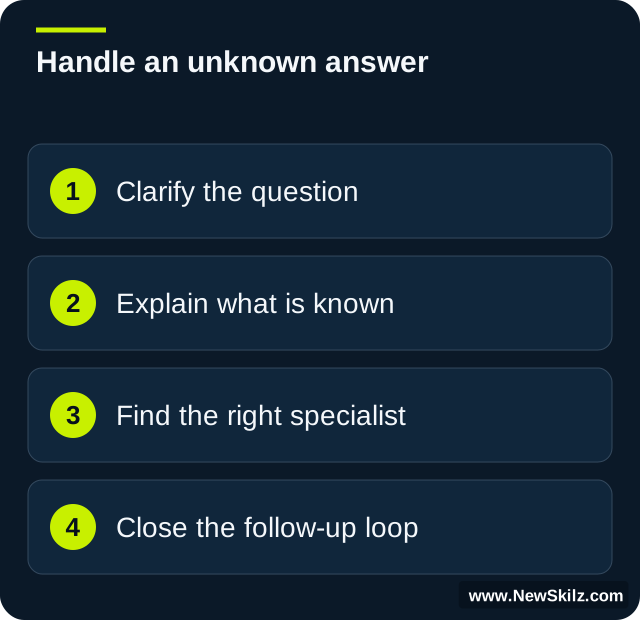
Practise a credible boundary

Illustrative example: a buyer asks a new AE whether a particular integration supports a workflow. The approved material does not confirm it. Instead of answering from memory, the learner explains the limit: “I do not want to give you an unconfirmed answer. Can we clarify the workflow you need, so I can take a precise question to our technical colleague?” The practice buyer supplies more context, and the seller agrees the appropriate next step.
This keeps the conversation useful without treating uncertainty as a performance failure. The observer checks whether the learner recognised the boundary, clarified the requirement and made only commitments they could own.
Complete the follow-up loop

Handling the moment is only the first part. Record the question, confirmed context, internal owner and agreed response route. Avoid promising a deadline before checking it can be met. Where an answer needs a specialist conversation, agree who will arrange it and what the buyer should expect.
- Recognise the limit of knowledge or authority.
- State that limit plainly.
- Clarify the buyer's actual requirement.
- Identify the approved source or responsible colleague.
- Agree a realistic follow-up and record it.
- Check that the buyer receives the confirmed response.
Use the organisation's existing systems for this work. The practice layer should reinforce your process, rather than create a separate promise tracker.
Put unknown answers into scenarios deliberately

“I can confirm [approved information]. I need to check [specific uncertainty]. To get you a useful answer, can we clarify [context]? The next step is [agreed action and owner].”
Give the practice buyer at least one question the learner is not expected to answer. Tell observers that safe handling is the target behaviour. Otherwise they may reward a confident guess or penalise a responsible escalation.
After the exercise, route genuine gaps in onboarding content to the internal owner. NewSkilz turns validated product information into credible scenarios and focused feedback, helping sellers handle questions clearly and involve the right specialist. The skill to develop is knowing how to continue a useful customer conversation while keeping factual authority where it belongs.
Make it relevant to your team.
Use your goals, roles and real situations to choose the next useful step.