
New starters can leave a practice meeting with a page of feedback and no clear idea what to change. “More confidence”, “better discovery” and “stronger presence” may express a coach's impression, but they do not describe the next action. Useful feedback names what happened, explains its effect and gives the learner something to try.

Choose the feedback focus before the attempt

Agree a small number of behaviours relevant to the task. In a discovery exercise, these might be following an answer and checking a summary. In a demonstration, they might be connecting the workflow to the buyer's priority and responding to an interruption. Use the team's approved playbook and role expectations.
Tell the learner what the observer will look for. This helps preparation and makes the review transparent. Keep factual accuracy as a clear requirement: a fluent answer using an invented product claim needs correction, rather than praise for delivery.
Ask for reflection before advice

After the attempt, ask the learner what they noticed. Where did the conversation become useful? Which response surprised them? What would they change? Their account can reveal whether they recognised the moment the observer wants to discuss.
Then add an observed example. Quote or describe a specific action without turning the whole conversation into a personal judgement. Check the effect with the practice buyer: did the response clarify the need, leave a question open or move past something important?
- Observation: what the seller said or did.
- Effect: how it shaped the buyer conversation.
- Adjustment: a practical action to test.
- Replay: the moment in which to try it.
Make one improvement visible

Illustrative example: a new seller asks about the buyer's current process, then moves straight to a demo after hearing about a delayed approval. The observer says: “You heard an important delay, but did not explore it. In the next attempt, ask what that delay affects before choosing what to show.” The learner replays that short section and discovers that the issue concerns an internal decision, rather than the reporting screen they planned to demonstrate.
The feedback gives the learner a behaviour to change and a reason to change it. It avoids criticising the person for lacking curiosity or confidence. Keep the useful part of the original attempt as well, so the seller knows what to retain.
Replay before adding another layer

Use the same situation for the immediate replay. The learner can then compare the effect of the adjustment without also solving an entirely new scenario. Afterwards, vary the buyer context to see whether the behaviour transfers.
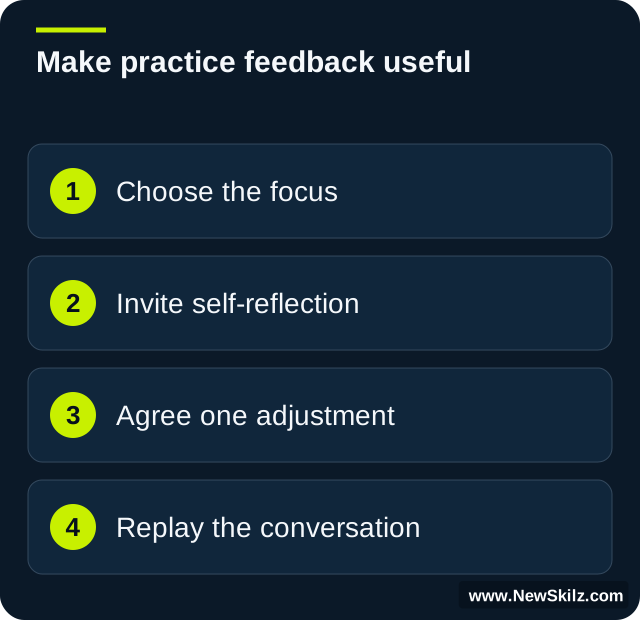
- Run a short, role-relevant attempt.
- Invite the learner's reflection.
- Share one observed example and its effect.
- Agree one change to test.
- Replay the relevant section.
- Review what changed and choose the next practice focus.
If several observers contribute, ask them to agree the priority rather than compete to provide more comments. A new starter should not have to reconcile contradictory advice while still learning the task.
Leave a usable coaching note
“Keep: [effective behaviour]. Practise next: [specific adjustment]. Evidence to notice: [observable action]. Scenario for next attempt: [context]. Approved source to review: [material, if needed].”
Share the note through the agreed internal coaching process. Separate a conversation behaviour from a product-knowledge gap so the right person supports each. Use the record to see whether the learner's next attempt changes, rather than repeating the same advice indefinitely.
NewSkilz combines tailored scenarios, observation and focused feedback to help new starters refine their approach around the client's onboarding content. The practical value is a clearer route from advice to action. Managers still own their team's development and readiness decisions, supported by specific evidence from what the learner practised.
Make it relevant to your team.
Use your goals, roles and real situations to choose the next useful step.