
“We barely use half the seats. Why should we renew?” The account team needs a credible conversation, rather than a hurried tour of features the customer has not adopted. Start by establishing what the customer wanted to achieve, what has happened and which concerns now shape their decision.

Prepare an account picture with visible gaps

Bring the agreed objectives, relevant use information, open service issues and previous commitments into one brief. Check where the information comes from and what it actually shows. Activity can indicate use; it does not automatically establish a business result. A lack of activity can have several explanations.
Separate observed evidence, customer feedback and your assumptions. Ask the account team which commitments remain unresolved and who owns them. Prepare for the people in the meeting, including anyone who was not part of the original purchase. Their understanding of value may differ from your original contact’s view.
Ask about work before explaining the renewal

Explore how the product fits current tasks. “Which teams have incorporated it into their work?” is a more useful opening than “Have you tried this new feature?” Ask what makes use worthwhile for those teams and what gets in the way elsewhere. Changes in roles, priorities or process can matter as much as product familiarity.
- What did you expect to be different by this point?
- Where is the service helping with a real task?
- Which intended uses have not happened, and why?
- What would you need to understand before deciding on renewal?
Listen for a changed objective. The original business case may no longer describe the customer’s present needs.
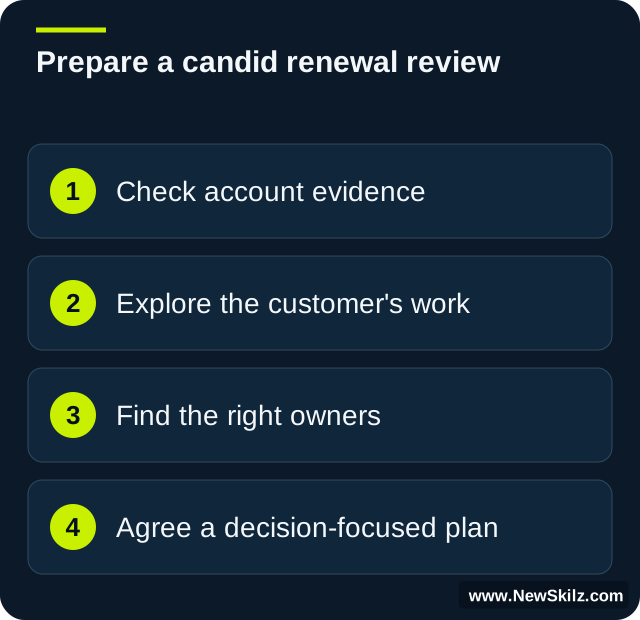
Use an illustrative concern to find the right owner

Imagine a customer with active users in one department and little use in another. The seller assumes that the second team needs more training. The customer explains that its manager still requires the old spreadsheet, so employees duplicate the task and eventually stop using the new process.
This issue needs a conversation with the relevant process owner. Product instruction may help, but it cannot decide which workflow the organisation should use. Summarise the barrier without blame, ask who can clarify the expected process and agree what evidence a review should consider. Keep responsibility realistic across the customer and account team.
Build an action plan that serves the decision
Choose a small number of actions linked to the concerns the customer has identified. Each action needs an owner, a purpose, a review point and an observable output. “Improve adoption” is too vague. “Department manager confirms which request process the team should use and reviews two examples with the customer success lead” creates a clearer task.
A concise plan can use four columns: concern, action, owner and evidence for review. Record supplier commitments as carefully as customer actions. Keep the renewal decision date visible and use the plan to help the customer evaluate progress, resolve concerns and make an informed decision.
Rehearse a candid account review
Practise with a colleague playing a customer who challenges both use and value. Include an unresolved supplier commitment so the seller must acknowledge their own side of the relationship. Observe how they handle dissatisfaction, clarify evidence and involve the right owner. Feedback should identify a specific response to keep and one to improve.
Close the real meeting by checking your summary of the customer’s concerns and the agreed actions. Send a record that distinguishes evidence from assumptions. At the review, examine what happened, including actions that did not progress. A useful account conversation gives both sides a clearer basis for the renewal decision.
NewSkilz tailors renewal practice to your customer success roles, approved account information and realistic ownership boundaries.
Make it relevant to your team.

Use your goals, roles and real situations to choose the next useful step.