
The finance lead wants a credible case. IT needs technical reassurance. Operations wants a workable change. A meeting can end with warm comments while those concerns remain unresolved. Prepare to help the group examine its decision criteria, rather than deliver one pitch and hope each stakeholder finds an answer in it.

Map what each person needs to judge

Before the meeting, identify attendees, responsibilities and known priorities. Treat missing information as a question to explore. A role title suggests possible concerns but does not establish what this person thinks. Ask your contact what the group intends to decide and why the meeting is happening now.
A preparation note can have four fields per stakeholder: desired outcome, stated concern, evidence needed and open question. Keep the customer’s language wherever possible. Share the relevant brief with your Sales Engineer or Customer Success colleague so each contributor understands the purpose of their part.
Give the meeting a shared purpose
Open by checking the intended outcome with the group. “We understand today is about deciding whether a focused technical evaluation is worthwhile. Does that fit what each of you needs?” Then invite any missing criterion. This gives competing priorities a place in the agenda before they emerge as interruptions.
Distinguish decisions the group can make today from questions requiring further validation. Agree how to handle those questions. A short list with an owner is more useful than leaving every concern in a general discussion. Make space for a quiet stakeholder whose agreement others may have assumed.
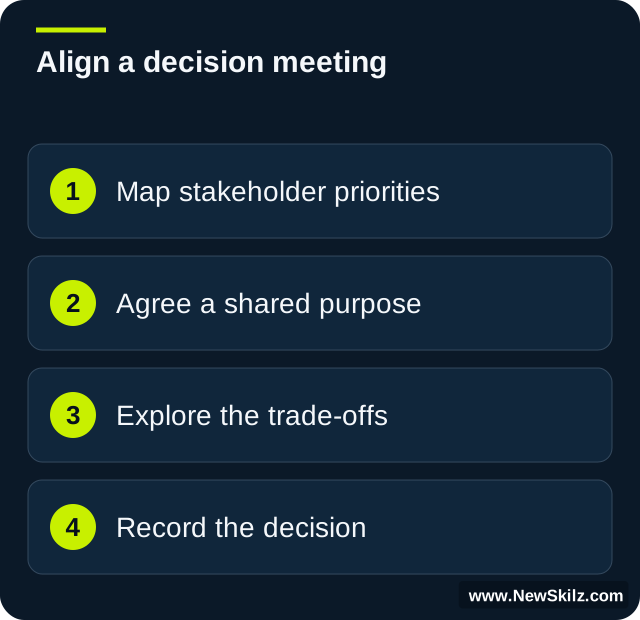
Explore the tension through a concrete example

In an illustrative meeting, finance favours lower reporting effort, IT is concerned about integration responsibilities and operations fears duplicated work during a change. The seller repeatedly returns to time savings. This leaves the other two stakeholders with reasons to withhold support.
A better move is to summarise the relationship: “The reporting benefit matters, but you need to understand integration ownership and how the transition would affect daily work before judging it.” Ask the group to correct that summary. Then identify which parts the supplier can validate and which require the customer’s own process and resource decisions.
Route questions without losing the shared objective
When one issue becomes detailed, explain why you are involving a colleague. “Our Sales Engineer can help clarify the approved integration approach and what still needs investigation.” Give the colleague the question and relevant context. After the answer, ask whether it addresses the stakeholder’s concern and what remains open.
- What is the specific question behind the objection?
- Which approved evidence answers it?
- Who owns any remaining validation?
- How does the answer affect the group’s next decision?
Check each stakeholder’s remaining questions, then bring the discussion back to the agreed purpose before moving on.
Close with a decision record people can recognise

Summarise confirmed points, unresolved questions and any decision reached. Assign an owner and review point to each follow-up, checking that the person accepts it. If the group is not ready to proceed, clarify what prevents the decision instead of describing the meeting as a success because nobody objected.
Rehearse this with colleagues playing stakeholders who have different priorities. Give each a concern to reveal only when invited or understood. Observe whether the seller notices tension, checks assumptions and keeps ownership clear. Repeat the hardest transition after feedback. The aim is a meeting where the next decision has a clearer basis.
NewSkilz builds stakeholder practice around your buyer roles, approved evidence and the commercial and technical colleagues sharing the conversation.
Make it relevant to your team.
Use your goals, roles and real situations to choose the next useful step.